What Is Powder Coating — and Why It’s Better Than Regular Paint?
At Metalworkshop, we often get the same question from new clients:
“So what makes powder coating better than regular painting?”
Here’s the thing — until you actually hold a powder-coated part in your hands, it’s hard to explain the difference. You don’t just see it — you feel it. The finish is smoother, the surface looks premium, and years later, the color still holds.
In this article, we’ll break it all down: what powder coating is, how it works, what types of coatings exist, and how it compares to conventional painting. By the end, you’ll know exactly why we believe this method is the gold standard for metal finishing.
What Is Powder Coating?
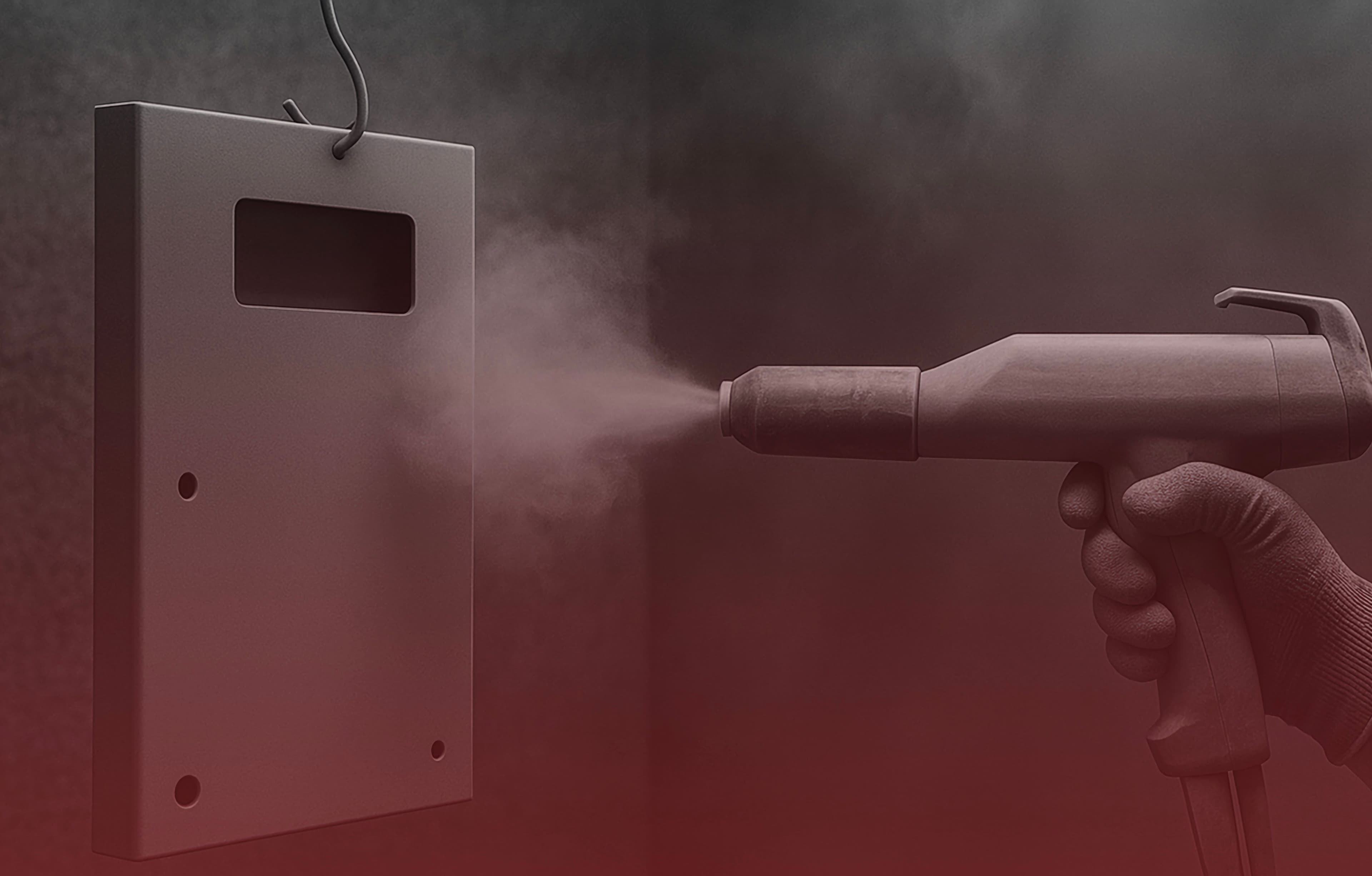
Powder coating is a process of applying dry, finely ground paint powder to a metal surface, which is then cured in a specialized oven to form a durable, uniform layer.
The technology relies on electrostatic powder coating — the powder particles are electrically charged so they adhere evenly to the surface. Once heated, the particles melt and bond together, forming a polymer coating that protects the metal from corrosion, scratches, and harsh environments.
No magic — just physics.
Types of Powder Coating Finishes
Powder coating finishes vary by their chemical base and surface texture — each chosen for specific performance and environmental needs. The right formula ensures long-term durability, protection, and a flawless look.
By chemical composition:
Epoxy coatings — designed for components exposed to harsh environments like acids, alkalis, or industrial chemicals. Extremely resistant to corrosion but not ideal for prolonged UV exposure.
Polyester coatings — UV-stable and weather-resistant, perfect for outdoor structures such as facades, fences, and metal architecture.
Epoxy-polyester hybrids — versatile coatings that combine the toughness of epoxy with the UV resistance of polyester. Commonly used for furniture, appliances, and general industrial parts.
By surface texture:
Matte — hides small imperfections and gives a deep, sophisticated appearance.
Glossy — adds brightness and emphasizes the shape of the part.
Textured — rougher, scratch-resistant surface ideal for industrial equipment and machinery.
Metallic — decorative “metal-flake” look that mimics anodized or chrome-like finishes.
Powder Coating Process
Every stage of the powder coating process affects the final result. From surface prep to curing, precision and cleanliness ensure a smooth, durable finish without flaws.
1. Surface preparation
Cleaning, sandblasting, and phosphating improve adhesion between the powder and the metal. It’s the foundation of durability — without proper prep, even the best powder can lose its strength.
2. Applying the powder
The coating is applied with an electrostatic spray gun in a filtered booth. Charged powder particles cling evenly to all surfaces, including edges, corners, and complex shapes.
3. Curing (polymerization)
The coated part is moved into an oven where it’s heated to 180–200 °C (356–392 °F). During this stage, the powder melts and cross-links at the molecular level, forming a continuous, sealed polymer coating that’s resistant to wear, impact, and corrosion.
Powder Coating vs. Conventional Painting
The difference between powder coating and regular painting is not just visual — it’s structural. Powder coating forms a single, solid protective layer without solvents, making it more eco-friendly, more durable, and more cost-efficient in the long run.
Durability & lifespan
Surface quality
Eco-friendliness & safety
Cost-efficiency
Regular Painting
2–4 years, then repainting required
Runs or uneven layers possible
Solvents, VOCs, and odor
Lower initial cost, frequent maintenance
Powder Coating
10–20 years with no color loss
Smooth, consistent, defect-free
Non-toxic, solvent-free, odorless
Higher upfront cost, long-term savings
Advantages of Powder Coating Metal
Powder coating isn’t just paint — it’s a full protective system. The cured layer becomes a dense, cross-linked shell that combines aesthetics, performance, and longevity in one process.
Exceptional durability
The polymer coating seals the metal from air, moisture, and salts — preventing oxidation and rust formation. That’s why it’s the top choice for coastal and industrial environments.
Corrosion protection
The polymer coating seals the metal from air, moisture, and salts — preventing oxidation and rust formation. That’s why it’s the top choice for coastal and industrial environments.
Consistent coverage
The electrostatic powder coating method ensures a uniform layer thickness over the entire surface — no drips, no brush marks, no uneven edges. It’s especially valuable for complex geometries.
Wide range of colors and textures
With the RAL palette and multiple finishes, you can achieve anything from a minimal matte black to a shimmering metallic effect. Powder coating lets you combine performance with design freedom.
Speed and efficiency
Unlike liquid paints that require several coats and long drying times, powder coating and curing take just a few hours. That means faster turnaround, lower production costs, and no waiting for paint to dry.
When to Choose Powder Coating
Not every metal part needs powder coating — but when durability, clean aesthetics, and zero maintenance are a priority, it’s hard to beat. If you want your product to stay beautiful and protected for years, here’s when powder coating is the smart choice:
For outdoor metal structures that face sunlight, rain, and temperature fluctuations.
For automotive wheels, where high impact and scratch resistance are essential.
For furniture, appliances, and interior elements that should look great even after decades of use.
For metal doors, gates, and fences exposed to humidity or direct contact with the environment.
Powder coating provides the best long-term balance between appearance and performance — that’s why industries from architecture to automotive rely on it for lasting protection.
Why Choose Powder Coating with Metalworkshop
We don’t just paint metal — we engineer finishes that extend its lifespan. At Metalworkshop, every project follows strict process control, high-end equipment, and hands-on expertise from our coating specialists.
We use Gema powder coating equipment to achieve consistent and precise electrostatic application.
All coating takes place in a sealed booth with filtered airflow, preventing dust or paint waste.
Our convection ovens ensure even temperature distribution during curing for a flawless polymer layer.
Each stage is supervised by an experienced team of operators and technologists who maintain accuracy from surface prep to final inspection.
Our Guarantees
Every metal part that leaves our workshop meets exact standards of quality and precision. We don’t just promise — we measure, verify, and deliver.
Full adherence to every step of the powder coating process, from cleaning to curing.
Expert selection of the right powder coating formula based on the material and application conditions.
Capability to coat metal parts of any shape or size — from small components to large industrial structures.
FAQ: Quick Answers from Our Experts
Powder coating is applied dry and contains no solvents. Once cured, it forms a seamless, solid polymer layer that resists damage.
On average, 10–20 years — depending on the environment and material.
Yes, but proper surface prep is essential. Powder coating works great for steel, aluminum, and stainless steel.
Honestly — no. The process requires professional equipment, controlled airflow, and a curing oven. Unlike spray paint, powder coating can’t be done “DIY-style” if you expect professional results.
Conclusion
So, why powder coating? Because it saves you time, effort, and money in the long run. You paint once — and forget about rust, peeling, or fading for the next 10–15 years.
At Metalworkshop, we genuinely love this technology. It’s reliable, eco-friendly, and the finish speaks for itself — smooth, rich, and built to last. If you want your metal to look great and stay protected for years, powder coating metal is the way to go. And we’ll make sure it’s done right from start to finish.