Metal Structure Fabrication: Technologies, Stages & Practical Tips
Modern structure fabrication is far more than cutting and painting. It’s a coordinated engineering process where drawing accuracy, weld quality, and even coating selection determine how long a structure lasts without distortion or corrosion.
This guide is for entrepreneurs, engineers, architects, and manufacturers who want a clear view of structural fabrication: the stages involved, the materials used, the equipment that matters, and how to choose the right partner.
By the end, you’ll understand how metal structure fabrication flows from drawing to delivery, where structural cutting, bending, welding, and powder coating fit in, and what to check before placing an order.
What Is Metal Structure Fabrication?
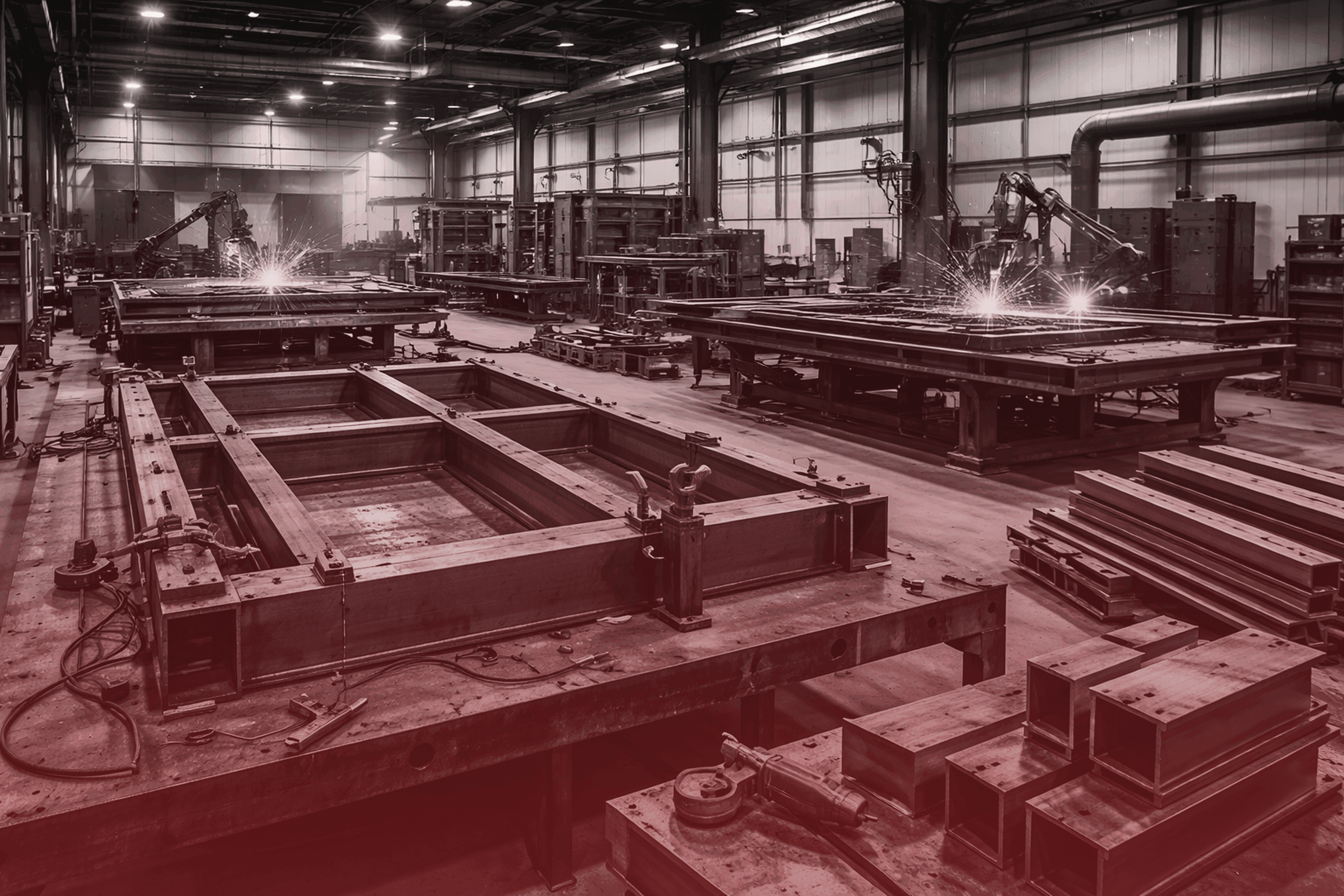
Metal structure fabrication is the process of turning metal profiles, sheets, and tubes into finished elements or assemblies by cutting, bending, and joining (welding or bolting).
Put simply: a metal structure is a shaped, load-bearing, or decorative assembly built from metal components.
Structure fabrication spans construction, machinery, logistics, agriculture, and interior design. Metal handles load, moisture, and temperature, yet keeps its geometry for decades. For a concise overview of the discipline, see metal fabrication.
Main Stages of Metal Structure Fabrication
Design and Drafting
Design is the foundation of the entire process. Even the most advanced equipment cannot correct an inaccurate drawing.
MetalWorkshop engineers work in CAD/CAM systems with an accuracy of ±0.1 mm, accepting drawings in DWG, DXF, STEP, STL formats.
Why it matters: holes must align, geometry must repeat, and the structure must withstand loads.
A 1 mm error in a drawing can result in a 10 mm misalignment on a large frame.
Metal Cutting
This is where the contour of the future part is formed.
At our production facility, CNC laser systems ensure a clean cut and ±0.1 mm accuracy, often without any additional machining.
For heat-sensitive or thick materials, waterjet cutting (посилання на сторінку) is used — it leaves the edge “cold” and stress-free, improving the quality of subsequent structural welding.
Metal Bending
Bending is the stage where a flat sheet becomes a functional component.
We use CNC hydraulic presses that form precise angles and radii with repeatable accuracy (angle control up to 0.01°).
Check out our CNC metal bending services — they show typical bending sequences, tools, and tolerances that ensure consistent geometry across batches.
Welding
Structural welding is the stage where separate parts become a single structure.
The welding method is selected depending on the metal thickness and visual requirements:
TIG (argon arc welding) — for thin or visible seams;
MIG/MAG (semi-automatic welding) — for large, heavy elements;
laser welding — for minimal heat input and perfectly clean seams.
Correct WPS/PQR parameters and heat input control prevent distortion.
Powder Coating
Powder coating is a dry application of paint, cured at 180–200°C.
Advantages:
even coating without drips;
high wear resistance;
corrosion protection that lasts for more than ten years.
Quality Control
Every part undergoes visual and dimensional inspection: welds, angles, radii, and holes are measured.
For serial production, templates and inspection jigs are used to ensure repeatability.
Want to estimate your project budget quickly? Use our metal structure fabrication cost calculator — it helps you calculate an approximate price before speaking with an engineer.
Materials Used in Structural Fabrication
Carbon steel
Stainless steel
Aluminum
Galvanized steel
Copper/Brass
Key Properties
High strength, cost-effective
Corrosion resistance
Light, formable
Zinc corrosion protection
Aesthetics, longevity
Typical Uses
Frames, beams, supports
Food industry, facades, outdoor fixtures
Architecture, transport, design
Outdoor parts, canopies, utility frames
Decorative panels, premium interiors
When to choose what:
Max corrosion resistance → stainless or aluminum.
Large industrial frames → carbon steel.
Outdoor economy → galvanized steel or coated carbon steel.
Material choice affects process: aluminum benefits from low-heat input in structural welding; stainless rewards better edge prep and cleaning; thicker carbon steel may prefer waterjet cutting before bending.
Equipment and Technologies in Metal Structure Fabrication
CNC laser cutters for fast, accurate structural cutting.
CNC press brakes for repeatable structural bending.
TIG/MIG/MAG and laser stations for structural welding.
Automation lifts precision and throughput: CAM nesting reduces scrap, offline bend simulation prevents collisions, and robotic torch paths stabilize cycle time.
At MetalWorkshop, CNC workflows routinely hold ±0.1 mm and cut lead time by up to 30% versus manual setups.
Common Mistakes in Metal Structure Fabrication
Wrong material selection
Ignoring welding procedure/sequence
Skipping in-process quality checks
Thin or poor coating
Outcome
Warping, premature corrosion
Weak joints, distortion
Misaligned parts, rework
Rust, faded finish
How to Avoid
Engineer review; define environment & loads
Use certified WPS; control heat input/clamps
Stage-gate inspections, jigs/fixtures
Specify powder thickness & proper prep
For baseline guidance on steel structures, consult official norms like national steelwork standards; for example, Ukraine’s steel structure standardization is cataloged at budstandart.
How to Choose a Reliable Structural Fabrication Company
What to Check Before Ordering
Proven experience and similar case studies.
CNC equipment in-house for accuracy and repeatability.
Certifications (e.g., ISO) and documented procedures.
Portfolio with real photos and references/reviews.
How to Recognize Quality Work
A capable shop offers a complete workflow: cutting → CNC bending → structural welding → powder coating, plus clear timelines, direct engineer communication, and inspection records.
That’s the Metalworkshop model: a full-cycle setup with transparent checkpoints and measurable tolerances.
Conclusions
Structure fabrication is where precision, process, and materials meet. The success of any project depends on how accurately the drawings are prepared, how carefully the materials are selected, and how consistently each stage — from structural cutting and bending to welding and powder coating — is executed.
When parts must be identical and tolerances are tight, CNC workflows ensure perfect repeatability, reducing both errors and production time. That’s why it’s worth trusting professionals who combine engineering expertise, advanced machinery, and documented quality control. With such an approach, your metal structure will serve reliably for decades — without rust, distortion, or unexpected maintenance.
FAQ
To save your time, we’ve gathered answers to the most common questions.
Structural fabrication is the end-to-end process of cutting, forming, and joining metal components into a functional structure.
It depends on complexity, volume, and material. Typical lead time ranges from 5 to 20 business days after drawing approval.
Yes. We accept DWG, DXF, STEP, STL, and adapt models to manufacturing standards—ideal for custom metal structures.
Stainless steel, galvanized steel, and aluminum—all provide excellent resistance to moisture, temperature swings, and UV.