CNC Turning vs. Milling: Which Metal Machining Method Should You Choose?
If you’ve ever needed custom parts made, you’ve probably faced the classic question: turning or milling? On paper, both are just types of CNC metal machining, but in practice they solve very different tasks.
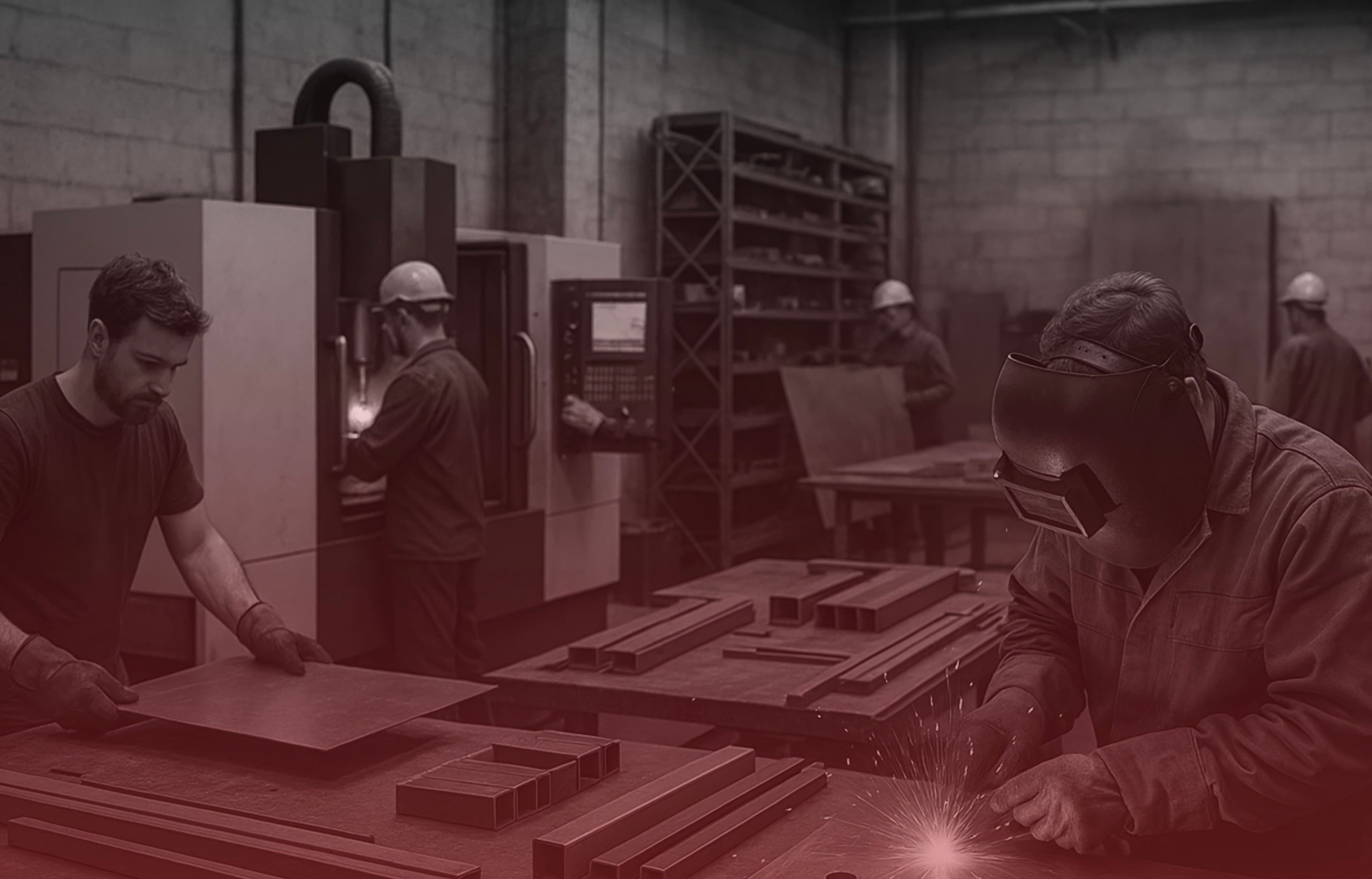
At Metalworkshop, we get asked this all the time. Our answer is simple: each process has its own “comfort zone.” Turning is best for round parts, while milling handles complex shapes and surfaces. Sometimes the two go hand in hand. In this article, we’ll break down the differences, show real examples of parts, and explain when it makes sense to combine both methods.
What is CNC Turning?
CNC turning is a type of metal machining where the workpiece rotates while a cutting tool gradually removes material. A lathe machine is designed primarily for cylindrical or conical shapes.
How does a lathe work?
A lathe machine rotates the workpiece on its axis. The cutting tool moves along or across the part, shaving off layers of material. This allows for precise diameters and smooth surfaces.
Examples of parts made by turning:
shafts,
bolts,
nuts,
bushings,
axles.
These are widely used in automotive, aerospace, and even household machinery.
Main turning operations:
Metal turning — the base process for cylindrical and conical shapes.
Thread cutting — external or internal.
Boring — enlarging inner holes with accuracy.
What is CNC Milling?
CNC milling is a machining method where the workpiece stays still (or moves gradually), and the cutting tool — a rotating milling cutter — removes material in layers.
How does a milling machine work?
A milling machine uses a rotating tool with multiple cutting edges. It can machine flat, contoured, and even 3D complex surfaces. That’s why milling is the go-to for parts with slots, pockets, and gear teeth.
Examples of parts made by milling:
housings,
gears,
slots and grooves,
decorative components,
complex profiles.
Main milling operations:
Face milling — producing flat surfaces.
Slot and groove milling — for keyways and guides.
Contour milling — following a specific shape.
End/face milling — machining surfaces with the tool’s end.
Create and calculate your own part
How to Choose Between CNC Turning and Milling?
Based on part geometry
Cylindrical or symmetrical parts → turning.
Complex shapes, slots, or irregular surfaces → milling.
When to combine turning and milling
Sometimes one method isn’t enough:
A gear with a central hole.
A housing with both cylindrical features and slots.
Bushings that need turning first, then groove milling.
These turning and milling operations can be done on multi-axis CNC machines or sequentially. Combining saves time and reduces errors.
Why consult with experts?
It may sound simple — “round goes on the lathe, complex goes on the mill” — but in production, details matter: material type, batch size, tolerances. That’s why it’s best to discuss your project with a machinist. At Metalworkshop, we help clients choose the optimal machining method for their needs.
Turning vs. Milling: A Quick Comparison
Typical part shapes
Cutting tool
Motion
Example parts
Core operations
CNC Turning
Cylindrical, conical
Lathe tool (single point)
Workpiece rotates
Shafts, bushings, nuts
Turning, threading, boring
CNC Milling
Flat, housing-type, with slots
Milling cutter (multi-edge)
Tool rotates
Gears, housings, grooves
Face milling, contour milling, slotting
Conclusion
So, which is better: turning or milling? It depends on the job. For cylindrical and conical parts, a lathe is the clear winner. For complex geometries, slots, and profiles, milling is the way to go. And when a part combines both, the best choice is integrated CNC machining using turning-milling centers.
At Metalworkshop, we don’t just know this in theory — we do it every day. From simple bolts to housings with dozens of holes, we deliver parts that meet real-world demands. If you want results without trial and error, talk to us — we’ll guide you and make sure your parts come out right the first time.
FAQ
Laser cutting achieves tighter tolerances, but waterjet preserves material properties without thermal stress.
Yes, but only up to ~20–25 mm effectively. Beyond that, waterjet is recommended.
Yes, waterjet cutting works perfectly on stainless steel of any thickness.
Titanium, stainless steel, aluminum, copper, brass, and also composites or brittle materials.