Metal Bending: Methods, Equipment & Tips for High-Quality Work
Sheet metal bending is one of those processes where precision defines everything.
A few degrees off — and a part won’t fit. Too much force — and the metal cracks. Not enough — and the bend won’t hold its shape.
That’s why mastering metal bending services is crucial for engineers, manufacturers, and designers alike.
In this article, we’ll explain how bending works, the main methods used in modern production, what equipment is best, and how to get a flawless result every time.
Whether you’re a professional metalworker, a manufacturer, or simply curious about how those perfect metal panels are made, this guide is for you.
What is Sheet Metal Bending?
Metal bending is the process of forming a metal sheet into a specific shape without breaking or damaging its structure.
In simple terms, it’s how we turn flat sheets into brackets, enclosures, frames, and hundreds of other parts used in everything from furniture to aircraft.
The goal of bending metal is to create a precise, durable form with consistent angles and clean edges — without weakening the material.
You can read the technical definition here, but in real-world manufacturing, it’s all about combining force, accuracy, and the right equipment.
Main Types of Sheet Metal Bending
By Temperature
Cold Bending
Cold bending is performed at room temperature using a metal bending machine such as a hydraulic press brake or a CNC-controlled system.
It’s the most common type of press brake bending in modern workshops.
Advantages:
High precision and repeatability
No oxidation or surface discoloration
Ideal for thin and medium sheet metals
Cold bending is used for ventilation ducts, housings, enclosures, and decorative metal panels.
Hot Bending
Hot bending is used when working with thick or high-strength materials that are difficult to bend cold.
The metal is heated to several hundred degrees until it becomes more pliable and easier to shape.
Advantages:
Lower risk of cracks
Suitable for large or thick profiles
Useful for repair and custom applications
It’s often used in architecture, heavy machinery, and artistic metalwork — wherever plastic deformation is required without excessive pressure.
By Technology / Execution Method
Manual Bending
Manual bending is done using simple tools, dies, or jigs.
It’s great for prototypes, one-off parts, or decorative items.
Pros: quick setup, flexibility, low cost.
Cons: limited precision, not suitable for thick or complex parts.
Mechanical Bending
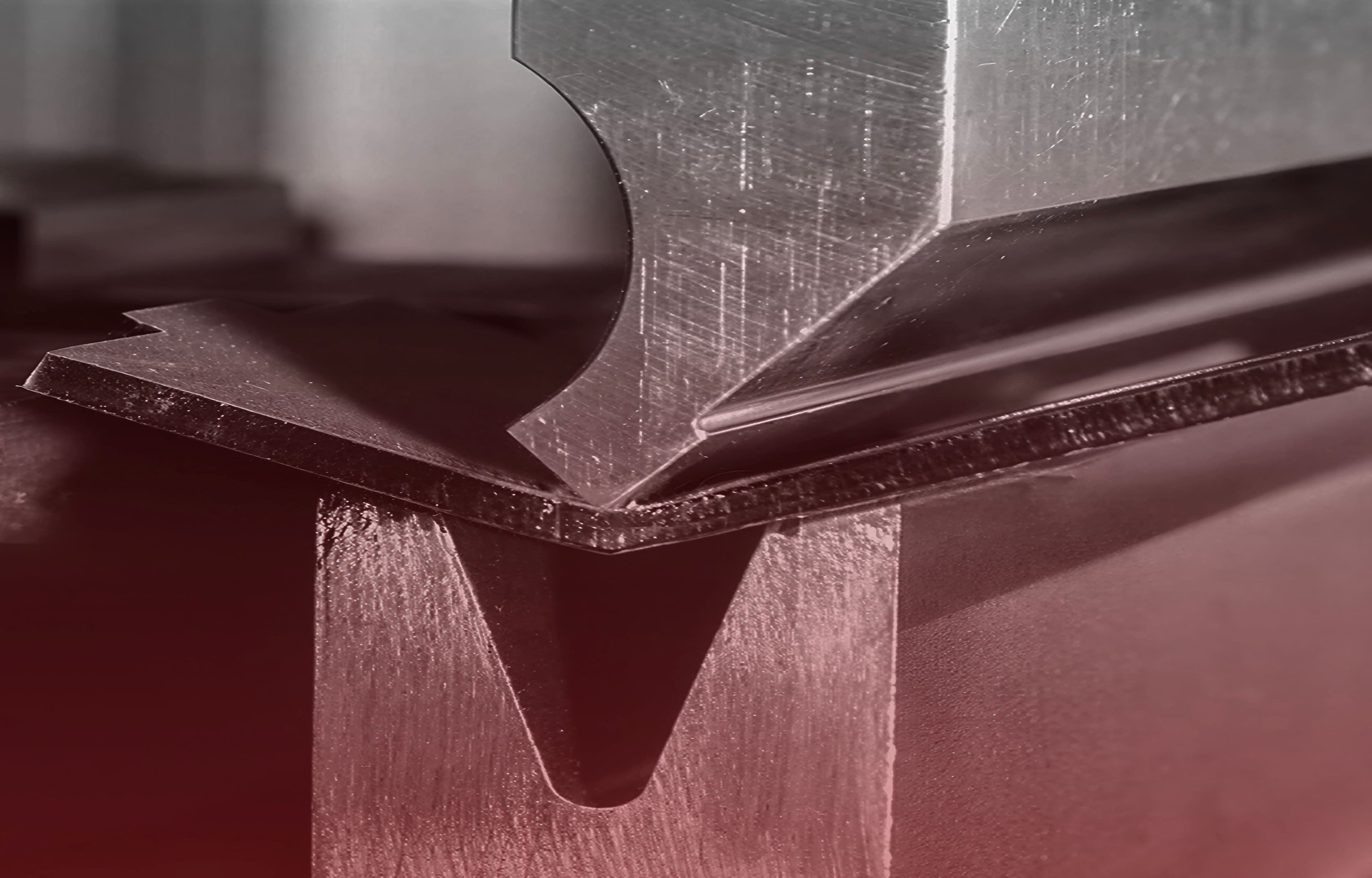
Mechanical or hydraulic press brake bending uses powerful machines that press the metal sheet between a punch and die.
This method ensures consistent angles and smooth edges — ideal for enclosures, control panels, or machine frames.
CNC Bending
CNC sheet metal bending (computer numerical control) is the gold standard for precision.
Every move of the machine is programmed — angle, pressure, radius, and sequence.
It ensures perfect repeatability for hundreds of identical parts with minimal error.
If you’re producing at scale, check out our CNC sheet metal bending services — the best option for businesses that need accuracy and speed without compromise.
By Bending Method
Air Bending
The punch presses the sheet into the die without touching the bottom, giving flexibility in the bend angle.
Used for versatile projects and thin metals.
Bottoming
Here, the punch fully presses the sheet into the die cavity.
This creates a precise angle but requires more force — ideal for mass production.
Coining
The punch literally “coins” the metal into shape, producing the highest precision and minimal spring-back.
Common in aerospace and electronics manufacturing.
Other Methods
V-bending — the most common form for panels and brackets.
Roll bending — for creating curved or cylindrical shapes.
Wipe bending — used when one flange must remain flat.
Rotary bending — ideal for polished surfaces where no marks are allowed.
Materials & Bendability
Not all metals behave the same during bending.
Aluminum — soft and flexible but prone to cracking if overworked.
Steel — strong and durable, but needs more force.
Copper and brass — highly ductile and perfect for decorative parts.
The thickness of the sheet and the grain direction of the material also matter.
Bending along the grain reduces cracking risk, while bending across it requires a larger radius.
Main Types of Bending Machines
There’s no single best metal bending machine — the choice depends on your task:
Manual machines — simple, affordable, used for small batches.
Hydraulic press brakes — powerful and universal, perfect for thick sheets.
Electric or servo press brakes — fast, clean, and energy-efficient.
CNC press brakes — top-tier precision and automation.
Modern workshops like MetalWorkshop use CNC equipment to guarantee micrometer-level accuracy for both prototypes and production batches.
Learn more about how these systems work on press brake.
Conclusion
Metal bending isn’t just a technical step — it’s where precision meets craftsmanship.
The choice of method, material, and machine determines whether the final part will be accurate, durable, and visually clean.
For serial production or projects requiring maximum accuracy, CNC sheet metal bending offers the best balance of efficiency and precision.
And when your part involves complex geometry or multiple bends, it’s worth trusting professionals who work with advanced CNC systems and 3D simulation tools.
That’s how you move from a flat sheet to a perfectly formed component — built to last and fit exactly as designed.
FAQ
To save your time, we’ve gathered answers to the most common questions.
It’s the process of forming metal sheets into specific shapes without breaking the structure.
Extreme accuracy, full automation, and repeatability for mass production.
Use the correct bend radius, follow the grain direction, and reduce force when necessary.